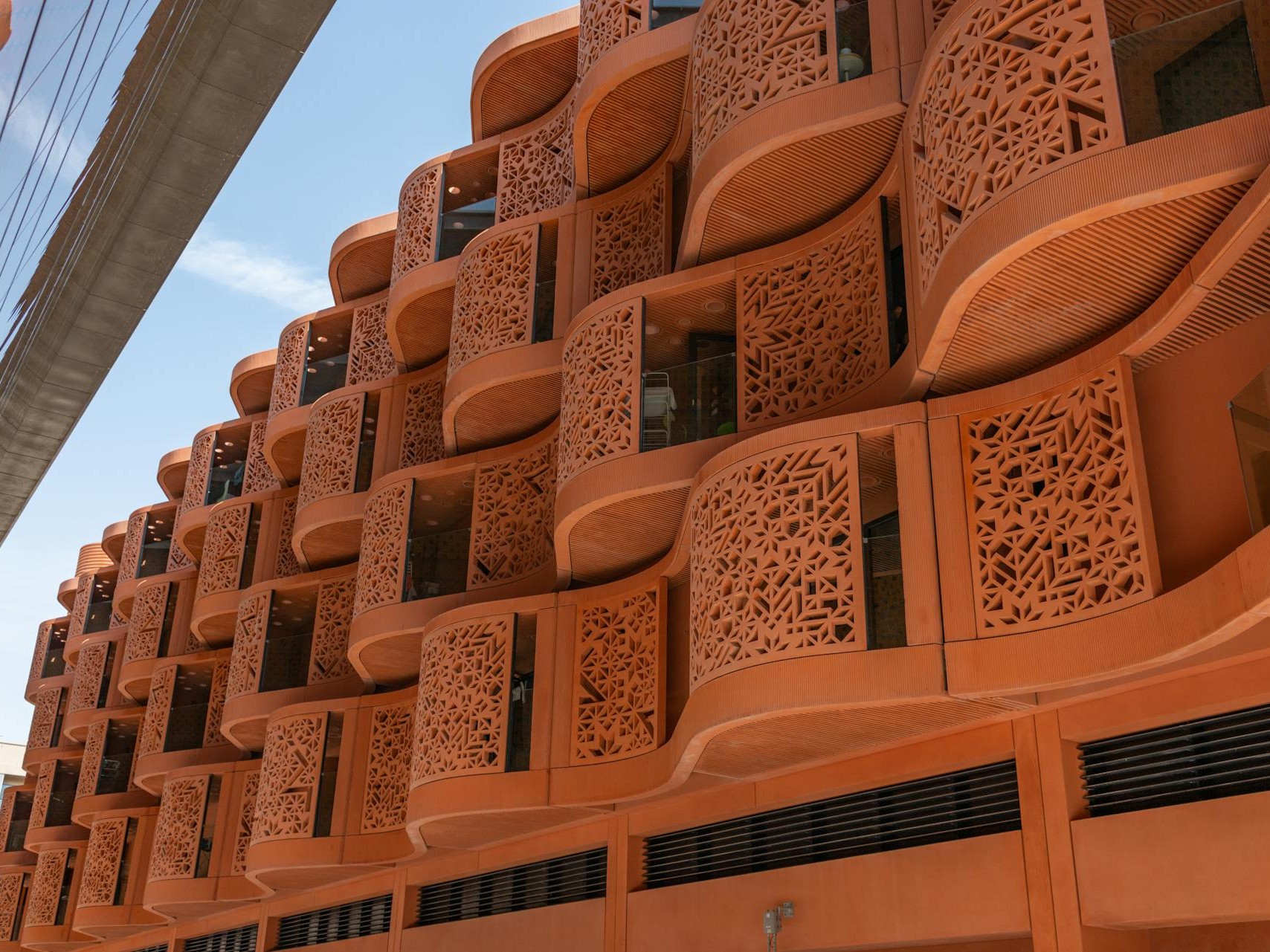
Climate-Responsive Infrastructure
GreenASHA Smart Buildings are designed to respond intelligently to climate challenges while reducing energy demand, carbon emissions, and resource consumption. Our approach integrates climate science, sustainable architecture, and smart technologies to create buildings that are resilient, efficient, and environmentally responsible.
We focus on designing structures that adapt to local climatic conditions such as heat, humidity, rainfall, air quality, and water stress. By optimizing natural ventilation, daylight utilization, thermal insulation, and passive cooling strategies, our buildings significantly lower dependence on mechanical energy systems.
Key Climate-Centric Features
- Energy Efficiency & Carbon Reduction: Integration of solar power, energy-efficient lighting, smart energy management systems, and high-performance building materials to minimize operational emissions.
- Thermal Comfort & Heat Resilience: Use of cool roofs, green roofs, reflective surfaces, shading strategies, and climate-optimized building orientation to combat rising temperatures and urban heat islands.
- Water Sensitivity & Climate Adaptation: Rainwater harvesting, greywater recycling, groundwater recharge systems, and low-flow fixtures to address water scarcity and climate variability.
- Air Quality & Health: Design for enhanced indoor air quality through green buffers, dust control landscaping, natural ventilation, and low-emission construction materials.
- Nature-Integrated Design: Green walls, urban forests, permeable pavements, and climate-friendly landscaping to improve microclimate, biodiversity, and stormwater management.
- Smart Monitoring & ESG Readiness: Real-time monitoring of energy, water, and emissions to support ESG reporting, carbon accounting, and sustainability certifications.
Impact
GreenASHA Smart Buildings reduce carbon footprints by 30–50%, cut water consumption by up to 40%, and improve occupant comfort and health while ensuring long-term climate resilience. They transform conventional infrastructure into climate-positive assets.
“GreenASHA Smart Buildings are engineered for the climate of today and the uncertainties of tomorrow—where sustainability, resilience, and intelligence come together to shape the future of infrastructure.”
Smart Systems
How Smart Systems Are Deployed
Site Assessment
We study energy, water, and material flows to understand your operational landscape.
01
Sensor & Tool Setup
Digital tools are installed to track performance across critical systems.
02
Data Integration
All data is collected into simple, intuitive dashboards for easy monitoring.
03
Analysis & Alerts
Systems highlight inefficiencies and risks with real-time notifications.
04
Optimization Support
We guide improvements using real data and operational insights.